Method
How we design land
We design in layers: earthworks first, then infrastructure and irrigation, then planting, with the use of the land over all of it. We start with the heaviest work and finish with the most delicate.
The design is built around human-plant symbionts. Seth defines one as “a plant species which has a direct metabolic connection available to our species”.

In layers
Five layers, from the ground up
Every project is drawn in five layers, from the ground up: information, earthworks, infrastructure (irrigation), vegetation and functionality.
Drawing: Seth Andrew Thompson
Water
First, read the water

A landscape divides into basins, set by the ridges that send rain down one slope or another. Put that flow together with the geology underneath and you have a strategy for catching water.
In this climate the strategy is to slow, spread and sink the water, which recharges the aquifer.
The study starts with a geographic information system, a site visit while it is raining, and conversations with people who have known the land for years.

Drawing: Seth Andrew Thompson

Earthworks
Five steps, then plant straight away
We study the ground, design, and mark out what will be moved. A trained operator does the digging, cutting once and piling the spoil on the upper side. Straight afterwards we seed, plant and mulch with wood chips to stop erosion.
Drawing: Seth Andrew Thompson
Planting
Planting by succession
Each line is planted with at least four phases of succession: a short-lived herbaceous phase, fast growth, a long period of accumulation and a slow transition to old growth. Swales are planted with trees as soon as they are dug.
Drawing: Seth Andrew Thompson

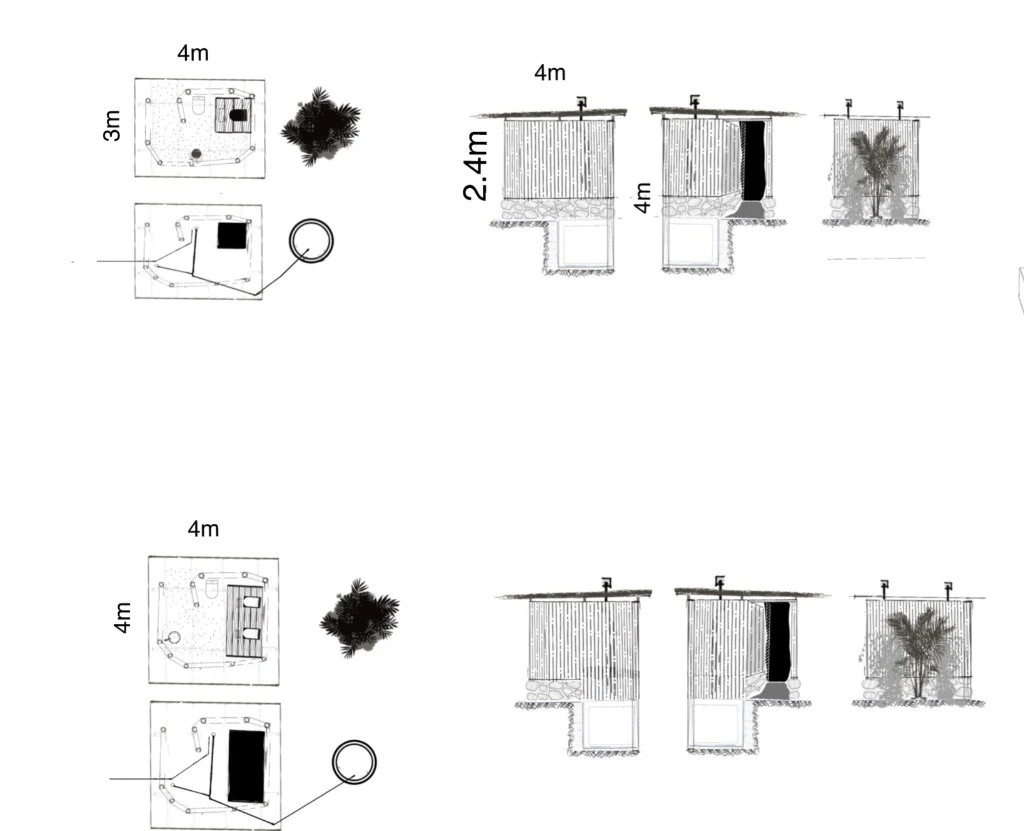
Infrastructure
Irrigation and structures
On top of the earthworks we install the infrastructure: mostly irrigation, plus a few structures that make installation and upkeep easier. Drip irrigation is temporary: it comes out and is reused after two or three years.
Drawing: Seth Andrew Thompson
